Checking | Hotel D’Inghilterra Roma
- Vanessa Gordon

- 18 hours ago
- 7 min read
I checked in to Hotel d’Inghilterra Roma, a historic five-star hotel near the Spanish Steps where Grand Tour heritage, Italian craftsmanship, and the intimacy of a private Roman residence come together.

Rome has a way of continually drawing you onward from one piazza, palazzo, café, or archaeological landmark to the next. Yet stepping inside Hotel d’Inghilterra Roma – Starhotels Collezione creates an immediate change of pace.
The hotel occupies an enviable position in Rome’s historic center, near Via Borgognona and just steps from Via Condotti and the Spanish Steps. The Trevi Fountain, Pantheon, Villa Borghese, and many of the city’s most recognizable landmarks can also be reached on foot.
The building was acquired in 1837 by Marino Torlonia, Duke of Bracciano, who commissioned architect Antonio Sarti to restore and expand the palazzo. It later became a guesthouse for artists, intellectuals, and young British aristocrats traveling through Europe on the Grand Tour, earning the name Hotel d’Angleterre and, eventually, Hotel d’Inghilterra.
Following an extensive restoration, the hotel reopened in September 2024 with its historic character carefully preserved. The result is neither a reproduction of the past nor a conventional contemporary luxury hotel. Instead, it feels like an elegant Roman residence that has evolved over generations.
The Stay

No two rooms at Hotel d’Inghilterra are exactly alike. Like those within a private home, they differ in their layouts, colors, decorative details, and historical references.
The first and third floors feature custom textiles created by Rubelli exclusively for Starhotels in shades inspired by historic interiors, including mustard yellow, green, and sky blue. Rooms on the second floor incorporate William Morris wallpapers, referencing the hotel’s longstanding connection to England while introducing a more modern interpretation of the original design.
Throughout the hotel, antique furnishings and classical artworks sit comfortably beside contemporary Italian pieces. Fine fabrics, marble, decorative plasterwork, handcrafted lighting, and carefully restored frames reinforce the feeling that each space has been assembled over time rather than designed all at once.
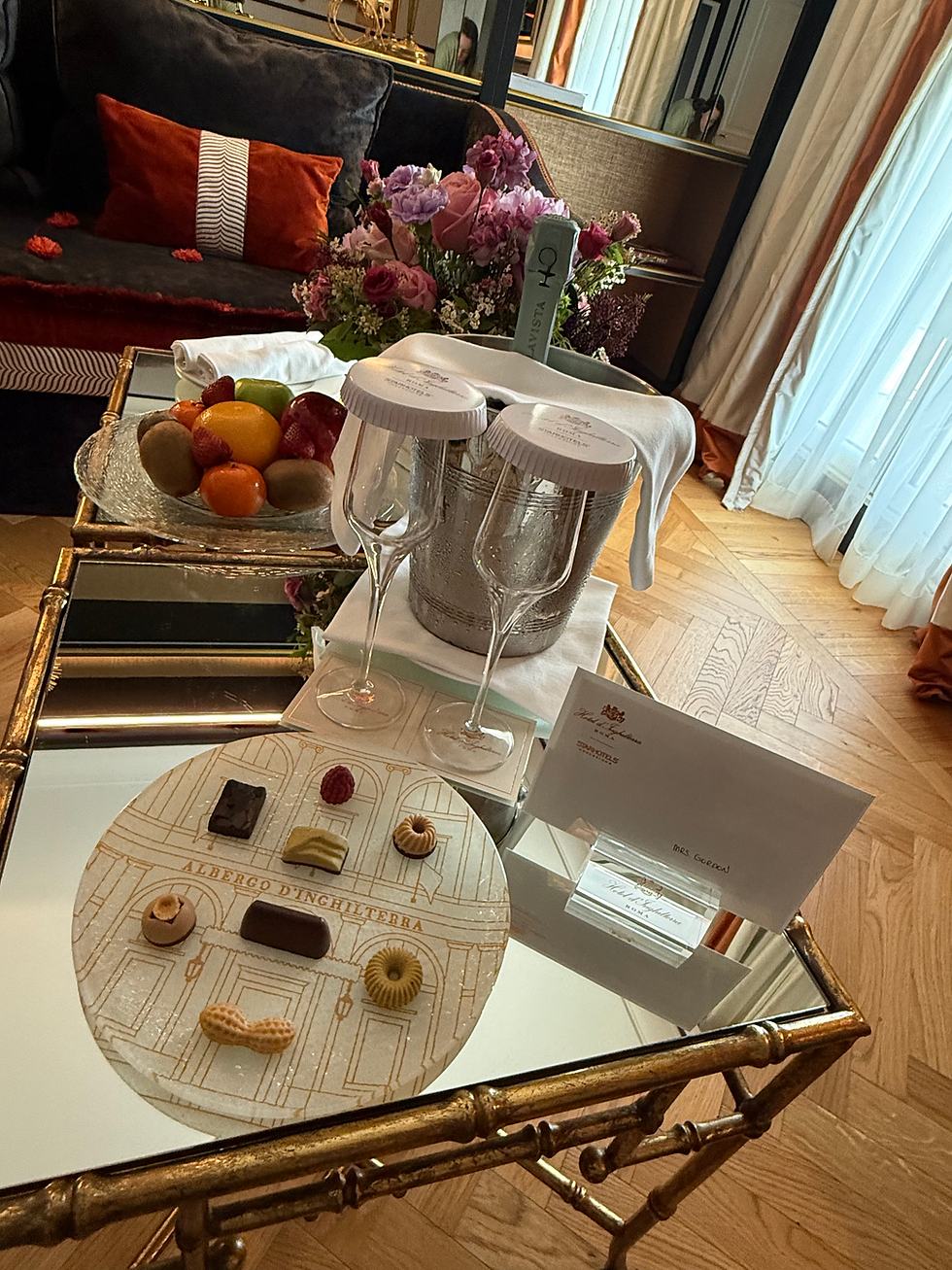

The recent restoration extended well beyond the guestrooms. Historical and architectural research uncovered Antonio Sarti’s original plans, allowing the design team to preserve significant features and return the reception desk to its original location. A sculptural plaster palm, once positioned in the foyer, was also recreated according to archival drawings.
Italian artisans played an important role in the transformation. Historic furniture and frames were restored by Fersini Restauro, a workshop located near the hotel, using gold leaf from Florentine producer Giusto Manetti Battiloro. Lighting was sourced from Italian workshops including Il Bronzetto, MLE, and Zonca Lighting, while Dedar and Rubelli textiles bring depth and warmth to the lounges.
Our room maintained this sense of individuality. It was refined without appearing overly formal, with the layered colors, textures, and decorative details one hopes to find in a historic Roman hotel. The private terrace added an entirely different dimension to the stay, creating a quiet outdoor living space above the surrounding streets.
My Favorite 90 Seconds

My favorite ninety seconds came late at night, while sipping tea on our terrace.
After a day immersed in Rome’s movement and visual intensity, the simplicity of the moment was exactly what I needed. The streets had become quieter, the temperature had softened, and the rooftops surrounding us appeared different beneath the evening sky.
There was no landmark to reach, photograph to take, or reservation waiting. For those ninety seconds, it was simply the tea, the warm Roman air, and the feeling of having a small corner of the city to ourselves.
It was an understated moment, but it captured the appeal of Hotel d’Inghilterra particularly well. The hotel places guests within steps of some of Rome’s busiest and most recognizable streets, then provides the privacy and stillness necessary to appreciate the city at a gentler pace.
The Moments That Make It

The hotel’s lounges are among the first spaces to establish its residential character. Designed to resemble the rooms of a noble private home, they combine vibrant wall colors, Dedar and Rubelli upholstery, restored chandeliers, antique furnishings, and classical and contemporary art.
The effect is elegant without feeling museum-like. These are rooms meant to be used—to meet before dinner, pause between excursions, or sit with a coffee before returning to the city.
Café Romano underwent a significant renovation as part of the hotel’s larger transformation. An additional interior room now connects with the lobby, creating the atmosphere of an Italian salotto, while the outdoor terrace overlooks the boutiques of pedestrian-friendly Via Borgognona.

Executive Chef Andrea Sangiuliano, who was raised in Rome and began learning his craft in his family’s restaurant, approaches the menu through seasonality, local ingredients, and the culinary traditions of Lazio. His cuisine draws from Roman classics while presenting them with a lighter, contemporary sensibility. Ingredients are sourced from across the region, from Rome’s local markets to the coastal fish auctions of Anzio.
Examples include a crisp zucchini flower filled with cacio e pepe and mezze maniche all’amatriciana. The restaurant serves breakfast, lunch, and dinner, making its terrace equally inviting for morning pastries, a midday pause, or a candlelit evening meal.
Pastry Chef Edoardo Volpe complements the savory menu with experience gained in Rome and Paris. His work brings together Italian flavors and modern pastry techniques, from breakfast viennoiseries to chocolate-focused after-dinner desserts.
The adjoining Café Romano Lounge Bar retains a more intimate, English-influenced identity. Leather seating, restored woodwork, antique mirrors, and a mixture of classical and modern art create an inviting setting for a Martini, original cocktail, Italian wine, digestif, or coffee. Head Barman Angelo Di Giorgi’s menu moves between timeless drinks and more unexpected interpretations.
Above the hotel, Terrazza Romana introduces another perspective. Located on the sixth floor, the rooftop cocktail bar looks across Rome toward Villa Medici, San Carlo al Corso, the Quirinale, and the Vittoriano.

Its terracotta, mustard, burgundy, and cream palette evokes a Roman sunset. Artisan-glazed tiles, travertine flooring, wrought-iron furniture, olive trees, lemon plants, and Mediterranean herbs give the rooftop a strong sense of place. A secluded lovers’ seat provides one of its most romantic vantage points.
The hotel’s signature drinks have included the Vespa Martini, a reinterpretation of the Vesper Martini with limoncello; Vacanze Romane, combining gin, bergamot rosolio, and rosemary syrup; and the alcohol-free 50 Special, made with cranberry, pineapple, coconut, and lemon.
These cocktails were introduced alongside the Vespa Grand Suite Experience, created to commemorate Vespa’s 80th anniversary. The experience traced ten Roman landmarks during a three-hour guided Vespa tour, connecting the Spanish Steps, Trevi Fountain, Colosseum, Pantheon, Castel Sant’Angelo, and Via Margutta through cinema, literature, and the history of the Grand Tour.
Hotel d’Inghilterra has long been associated with figures who helped shape the world’s perception of Rome, including Oscar Wilde, Mark Twain, Ernest Hemingway, Hans Christian Andersen, Henry James, Ezra Pound, Italo Calvino, Elizabeth Taylor, Gregory Peck, Audrey Hepburn, and Gore Vidal. Polish novelist Henryk Sienkiewicz, author of Quo Vadis, is honored with a plaque on the hotel’s façade commemorating his stay in 1893.

The Spa Suite adds a quieter experience beneath the hotel’s historic surface. The private wellness sanctuary includes a whirlpool bath, relaxation area, double treatment cabin, Smart Steam cabin by Starpool, and an additional room for individual treatments.
Travertine, marble, glass, golden metal, dark walnut, and the building’s original vaulted ceilings create a space inspired by the atmosphere of an ancient Roman bathing retreat. Treatments are provided in collaboration with KamiSpa and incorporate Thai, Shiatsu, Lomi-Lomi, and other traditional Asian techniques. Sisley products are used for facial treatments.
A separate Technogym fitness area includes treadmills, stationary bicycles, and space for yoga and Pilates.
Who This Hotel Is Actually For

Hotel d’Inghilterra is best suited to travelers who value history, craftsmanship, and individuality over the polished uniformity of a larger contemporary hotel.
It is an especially strong choice for couples, culturally curious travelers, luxury shoppers, and returning visitors who want to remain closely connected to Rome’s historic center. Via Condotti and the Spanish Steps are moments away, while the concierge can arrange more specialized experiences, including private Vatican Museum visits, tours of Underground Rome and St. Peter’s tomb, and appointments at Italian artisan workshops.
The hotel will also appeal to travelers who want their accommodations to reflect their destination. Its English influences, Grand Tour history, Roman color palette, Italian furnishings, and collection of art create an identity that could not easily be transferred to another city.
Some guests will be drawn to the literary and cinematic history, the rooftop aperitivo, or the promise of staying in a hotel that once hosted Audrey Hepburn, Gregory Peck, and Ernest Hemingway.
Its real strength, however, is intimacy. Despite its prestigious history and central address, Hotel d’Inghilterra never feels like a monument. It feels like a private Roman home, albeit one with a particularly fascinating guestbook.
Practical Stay Notes

Visited: mid spring
Length of stay: 2 nights
Room: Guest room with private terrace
View: Historic central Rome and the surrounding rooftops
Purpose: work related visit to Rome before traveling to Tuscany and eventually to Florence
Nearby Points of Interest
Spanish Steps: Approximately 300 meters from the hotel, making it easy to visit before the daytime crowds arrive or later in the evening.
Via Condotti: Rome’s best-known luxury shopping street is moments away, with boutiques representing leading Italian and international fashion houses.
Trevi Fountain: Approximately 0.5 kilometers from the hotel and easily reached on foot through the historic center.
Pantheon: Around 0.8 kilometers away, surrounded by lively piazzas, cafés, restaurants, and narrow streets made for wandering.
Villa Borghese and the Pincio Terrace: Within walking distance for gardens, museums, and panoramic views across Rome.
Piazza del Popolo: Approximately one kilometer away and a natural starting point for exploring Via del Corso and the northern edge of the historic center.
Piazza Navona: Around 1.1 kilometers from the hotel and known for its Baroque fountains, architecture, and energetic street life.
Castel Sant’Angelo: Approximately 1.2 kilometers away, with St. Peter’s Basilica and Vatican City continuing beyond it across the Tiber.
Roman Forum and Colosseum: Approximately two kilometers from the hotel and accessible by taxi, public transportation, or a longer walk through central Rome.


