I checked into Grosvenor House Suites in London midweek in early April. Set on Park Lane in Mayfair across from the famous Hyde Park, Grosvenor House Suites are luxurious accommodations unlike any you have ever stayed in whilst visiting England’s capital. There is perhaps no other property in Central London that emulates the ample space and luxurious accommodations that Grosvenor House Suites has curated.
Credit: Grosvenor House Suites
The Stay
I found that Grosvenor House Suites’ accommodations are carefully tailored to provide discreet service with the comfort and ease of a private residence. Their award-winning concierges are known for providing local knowledge, babysitting, and party planning services. At the same time, butlers can take care of laundry, shoe-cleaning, meal planning, and personal shopping needs as needed. Simply put, it is home away from home, but with a serious luxurious upgrade.
The Suites provide flexible living spaces ranging from airy studios to elegant three-bedroom apartments. Studio Suites provide welcoming spaces equipped with kitchen amenities, personalised minibars, and turn-down service. The Suites feature either the atrium or street views.
Credit: Vanessa Gordon
One Bed Deluxe View. Credit: Grosvenor House Suites
The four Penthouses on the top floor offer skyline views from their balconies and exquisite yet subdued interior design, complete with Butler service upon request. Each includes an expansive family living area for entertaining purposes, with either park or city views available to add an element of surprise and luxury.
The Mayfair Penthouse features an open plan layout designed specifically to host events, its spaciousness makes this perfect for hosting parties of all sorts with stunning city views across Mount Street.
The Grosvenor Penthouse is their largest suite, which includes an elegant study with a grand piano and views over Hyde Park. The Kensington Penthouse boasts a master bedroom featuring its own balcony offering expansive city skyline and Mayfair rooftop views. The Knightsbridge Penthouse provides the epitome of luxury with a balcony overlooking Hyde Park, boasting spectacular views.
Grosvenor Penthouse Bedroom. Credit: Grosvenor House Suites
Grosvenor Penthouse. Credit: Grosvenor House Suites
Grosvenor Penthouse Kitchen. Credit: Grosvenor House Suites
Each penthouse suite offers unmatched space, amenities, and service, making them suitable for entertaining and relaxing purposes.
My Favorite 90 Seconds
Credit: Vanessa Gordon
Breakfast room service complete with hot lattes. Notable menu items include the Smoked Salmon and Scrambled Eggs with Exmoor Salted Caviar and Buttermilk Pancakes with Crispy Streaky Bacon and Maple Syrup, Eggs Florentine, and Avocado and Poached Burford Brown Eggs.
For me, enjoying breakfast in-room, with seasonal and sustainable produce delivered directly to my suite, is a moment that defines the stay. It is a quiet, residential luxury experience in the heart of Mayfair.
Credit: Vanessa Gordon
Credit: Vanessa Gordon
The Atrium, an inviting courtyard within the establishment, provides guests with an ideal space to indulge in light refreshments. I could sip cocktails by the fire while entertaining friends with tea and cakes, or simply unwind in its serene environment.
The Moments That Make It
For those keeping up with their wellness routine while on holiday, Grosvenor House Suites offers yoga mats, or personal trainers, hair, beauty consultants, and wellness practitioners, which can be booked as needed.
Amenities offered that help make guests feel at home include a personal shopper, private dining experiences, valet parking services, and superior fitness equipment. Whatever I required to feel right at home in my accommodation was always available to make the experience even more pleasant.
Credit: Vanessa Gordon
Butlers specialize in discreet but anticipatory service by handling daily needs, such as attending to laundry, shoe-cleaning, meal organization, or personal shopping.
Families and pets are warmly welcomed at Grosvenor House Suites. The Guest Relations Team will gladly install age-appropriate toy boxes, teepees, and junior bathrobes before guests arrive. Furthermore, child-oriented activities or access to David Lloyd Kensington Club pool may also be arranged upon request. At the same time, convenient in-suite amenities permit cooking and laundry to take place with ease.
Who This Hotel Is Actually For
Atrium. Credit: Grosvenor House Suites
Grosvenor House Suites is for discerning travelers seeking ample space and luxurious accommodations in Central London. Its flexible living spaces from airy studios to elegant three-bedroom apartments make it ideal for couples and families alike.
In my view, it is equally suited for extended stays, business travelers who prefer residential-style living, and guests who require privacy, space, and five-star service amenities while visiting England’s capital.
View:Atrium view overlooking the property’s serene courtyard
Purpose: Leisurely spring trip to London
Reader Takeaways
Credit: Vanessa Gordon
Best time to visit: spring or the festive season (November and December)
Can’t-miss experience:Breakfast served in-room enjoying Smoked Salmon and Scrambled Eggs with Exmoor Salted Caviar or Buttermilk Pancakes with Crispy Streaky Bacon and Maple Syrup delivered directly to your suite for a quiet, residential luxury moment overlooking Mayfair.
Best for:Discerning travelers seeking ample space and luxurious accommodations in Central London. Ideal for couples, families, extended stays, and business travelers who prefer residential-style living with five-star service amenities, privacy, flexibility, and discreet yet homely hospitality.
Nearby Points of Interest
Hyde Park: Directly across from Grosvenor House Suites, one of London’s most notable green spaces, ideal for morning walks, cycling, or simply enjoying the refined atmosphere of Park Lane.
St Paul’s Cathedral: An internationally acclaimed Anglican cathedral known for its magnificent dome and English Baroque architecture. Visitors can explore its stunning interior, including the famed Whispering Gallery with panoramic city views.
Bond Street: Home to luxury boutiques and galleries, just moments away in the heart of Mayfair.
Soho: A lively district nearby offering theatres, restaurants, and nightlife.
Chile is one of the most diverse, interesting, and beautiful countries in South America. It has breathtaking landscapes from the Atacama Desert to the Andes Mountain Range, ancient historic sites such as Easter Island, and a rich culture combining its indigenous heritage with Spanish colonial influences.
Image by depositphotos.com
As such, the country has something for everyone, including exciting outdoor adventures, delicious food, fascinating stories, and untouched beauty. But with so many things to see and do in Chile, it can be hard to decide what to prioritize as a first-time visitor.
To help narrow it down, here is the ultimate 2-week itinerary for your first-time visiting Chile, to ensure you see and experience as many highlights of this incredible country as possible in one trip.
La Moneda Building. Credit: Chanelle Rosenbaum
Day 1-2: Explore Santiago
The best way to begin (and end) your trip is in Chile’s capital and largest city, Santiago. Not only is Santiago a bustling and fascinating city, but it’s also the easiest place to get to in Chile, with the country’s only major international airport and direct flights from North America, Europe, and Australia.
Ideally, you really do need at least 2 full days to properly see the city’s key attractions and explore its vibrant neighbourhoods. As a first stop, you should visit the ‘Plaza de Armas’ which is the city’s central historic square, dating back to 1541, and serves as the reference point for measuring the distances to all other parts of Chile.
The square also features some of Chile’s most architecturally significant buildings, including the Central Post Office (formerly the Governor’s Palace), the Metropolitan Cathedral, and the Natural History Museum of Chile (formerly the Royal Court of Justice). Another key landmark to visit nearby is the ‘Palacio de La Moneda’, which houses Chile’s presidential offices and was the country’s official mint.
View of Santiago. Credit: Chanelle Rosenbaum
In addition to seeing Santiago’s historical downtown area, there are also several must-see neighbourhoods to explore. Lastarria is a hub for art and culture, with cobblestone streets, art deco buildings and street vendors. Bellavista is the bohemian quarter, known for its colourful buildings and lively music and nightlife scene. And Barrio Italia is a picturesque neighbourhood home to plenty of boutique stores and some of the city’s best restaurants. This is a great place to go to try some authentic Chilean food and sip on a Pisco Sour, Chile’s national drink!
Next, for the best view in Santiago, head to the top of Cerro San Cristobal (San Cristobal Hill). The hill is the centre of South America’s largest urban park and has unobstructed panoramic views of the city below and surrounding Andes Mountain range. Plus, on its peak, you will find one of Chile’s most important religious sites and an icon of Santiago - the Sanctuaryof the Immaculate Conception and a 14-metre-high statue of the Virgin Mary. There are two ways to get to the top of Cerro San Cristobal – either by hiking or by riding the Santiago Cable Car.
Finally, if you have time, Santiago is also home to some of Chile’s most interesting museums. In particular, the Museum of Memory and Human Rights will teach you about Chile’s controversial history and politics. And the Chilean National Museum of Fine Arts houses more than 5,000 Chilean and international works and is South America’s oldest museum!
Day 3: Day Trip to the Beach
One of the best things about Santiago is its proximity to some of Chile’s other popular destinations making it a great base to take day trips from. In particular, it’s only a 2-hour drive from the beach and the beautiful coastal towns of Valparaisoand Vina del Mar. You can either rent a car and drive here yourself, take the bus, or book yourself onto a day tour.
Although these towns are within close proximity of each other, they each offer completely different experiences and are both worth visiting. Vina del Mar is a resort-style town and the most popular domestic tourism destination. And with good reason! It has a lively promenade along a huge stretch of sandy beach, and plenty of attractions including street vendors, performers, open-air markets and a casino.
In addition to the beach, there are several other sights to see in Vina del Mar, including the historic German-built Wulff Castle, the Flower Clock – which is fully functioning and made from Swiss machinery and red flowers, and the National Botanical Garden.
Valparaiso on the other hand doesn’t have many beaches, but it’s brimming with culture and charm.
The town was once a thriving shipping port which is made up of late 19th-century European buildings, charming hillside funiculars and vibrant neighbourhoods. In particular, Cerro Concepcion and Cerro Alegre are the two most iconic areas in Valparaiso, full of colourful graffiti, charming boutiques and cute cafes. Interestingly, there’s also a strong British and German influence here, dating back to settlers from the 19th century.
Credit: Chanelle Rosenbaum
Day 4: Experience Chile’s Wine Country
By day 4 you’re probably ready to take a break from sightseeing. Luckily, next on the agenda is to enjoy some downtime by savouring Chilean wine at some of the country’s best vineyards.
Santiago is conveniently located in the middle of several of Chile’s most renowned wine-producing regions, so you can easily visit one or more of them on a day trip from the city.
To the north you have the Aconcagua Valley which has a long tradition of producing red wines. Northwest from the city is the Casablanca Valley which is known for having Chile’s best white wine. And south you will find the Maipo Valley, famous for its Cabernet Sauvignon, and the Colchagua Valley, which is one of Chile’s most promising wine regions.
If you have rented a car, you can plan your own trip to wine country, based on the wineries which interest you most and type of wines you want to sample. However, for an easier option, there are several different tours which you can book, departing from Santiago, which take you on a full-day excursion to multiple wineries, complete with tastings.
Days 5-6: Visit the Atacama Desert
Departing Santiago, your next stop will be San Pedro de Atacama. Here, you will get to explore the unique Atacama Desert landscapes, made up of mountains, volcanos, salt flats, lagoons, and hot springs.
To get there, you will need to take a 2-hour flight north to Calama Airport, ideally departing early in the morning. Upon arrival in Calama, there are free airport shuttles to San Pedro de Atacama, which is about a 1-hour drive away.
The altitude here is quite high, at 7,982 feet (2,433 metres) above sea level, so it’s best to take it easy on your first day while you acclimatize. A great way to do this is by visiting the Meteorite Museum, which houses a collection of over 3,200 meteorites found in the surrounding desert, including some dating back as far as 4.5 million years ago.
In the evening, you’ll want to watch the mesmerizing sunset above the Atacama Desert. The best place to do this is over the wind-sculpted sand dunes of the Moon Valley.
Located, 11 miles (17 kilometres) from town, you will need to book either a guided tour or a taxi to get here, but it’s well worth the effort!
Once you return to town, enjoy some traditional Chilean cuisine at one San Pedro de Atacama’s local restaurants. Adobe is one of the most popular restaurants in town, with excellent food and a huge bonfire in the middle of the restaurant. Or, if you want to enjoy dinner accompanied by some live music, La Casona is a traditional restaurant with three differently themed rooms, where local artics play a range of musical styles every day.
The next day, have an early start to visit the Salt Flats. Doing this excursion as part of a tour really is the easiest and best way to see as much as possible and learn about the fascinating landscape. Most tours will pick you up from your hotel room and take you to several stops throughout the day, including the Licancabur Volcano, the Aguada de Quepiaco wetland, and of course the Tara Salt Flats, where you will see unique landscapes, lagoons, giant rock formations, and a range of wildlife including flamingoes.
Once you return to town, enjoy some downtown and dinner before joining a stargazing tour. The Atacama Desert is one of the best places in the world to see the night sky, thanks to high altitudes, low humidity, and almost non-existent light pollution. You will get to observe the constellations both with the naked eye and through a telescope while learning more about astronomy, for a memorable last night in the desert.
Day 7: Fly to Punta Arenas
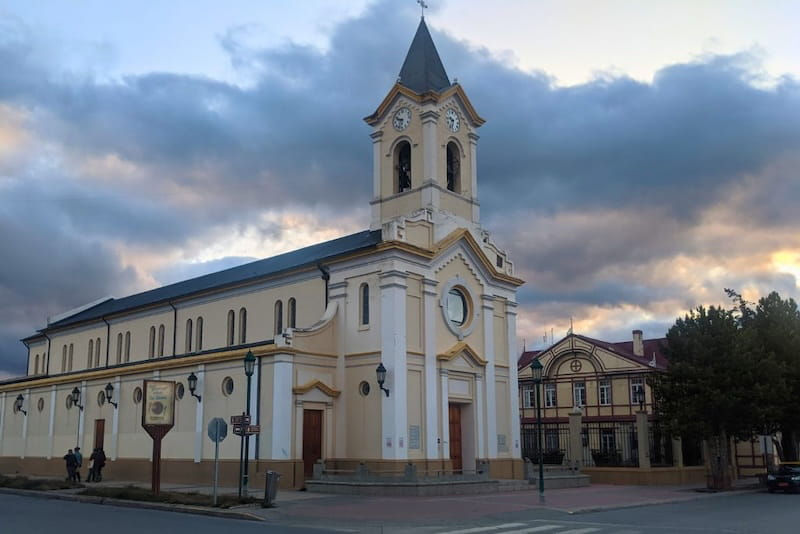
After a busy first week in Chile, day 7 will be a travel and rest day. Departing from Calama Airport, you will have a 5-hour flight (via Santiago) to Punta Arenas in southern Chile. Upon arrival in Punta Arenas, take some time to relax at your hotel and explore the small city on foot, to see its monuments, street art and varied architecture. There are also plenty of restaurants in the city offering local and international cuisines, so you will easily be able to find somewhere to grab some dinner.
Credit: Chanelle Rosenbaum
Day 8: See the Penguins on Magdalena Island
Today you will get to experience the playfulness of thousands of penguins in their natural habitat by taking a tour to Magdalena Island. Departing early in the morning, the tour takes you on a scenic cruise through the Strait of Magellan before arriving at Magdalena Island where the boat docks and you get to see this cute colony of birds up close. Weather permitting, the cruise will also pass by Isla Marta where you can see sea lions and seals lounging on the rocky shores.
Upon your return to Punta Arenas, catch an afternoon bus to your next destination, Puerto Natales, the gateway to Chilean Patagonia. The ride takes about 2 hours and once you get there you will be ready to check-in to your hotel and head into town for some dinner at one of the many local bars or restaurants.
Day 9: Spend the Day at an ‘Estancia’
Estancias (ranches) are the heart of the Patagonian lifestyle and culture. Departing from Puerto Natales, take a full-day tour to Estancia La Peninsula, a 19.000-hectare family-owned ranch, where you will get to experience the Gaucho lifestyle for yourself. Plus, you’ll get to see the breathtaking Patagonian Fjords on your way, as the tour begins and ends with a boat ride through the Last Hope Fjord, taking you to and from the estancia.
Upon arrival, you will have the option between going on a 2-hour trek or horseback ride, to explore the ranch’s grounds. Then, you’ll get to refuel with a traditional lamb barbeque lunch before learning more about the work and life on the ranch with a herding dog and sheep shearing demonstration. You will then get some time to explore on your own or enjoy a glass of Chilean wine before getting the boat back to Puerto Natales for the evening.
Paine Grande. Credit: Chanelle Rosenbaum
Day 10-12: Explore Torres del Paine National Park
Saving the best for last, the final destination on your Chilean adventure is Torres del Paine National Park, the crown jewel of Patagonia. The park has some of Chile’s best hikes and adventure activities and is arguably the most scenic destination in the country.
Torres del Paine is best known for its three distinctive granite peaks (after which the park is named) and the surrounding valley landscapes full of dramatic mountain peaks, huge glaciers, bright blue lakes, unique ecological zones, and rugged hiking trails. The park really is a hiker’s paradise!
To truly experience Torres del Paine, you should book to stay inside the park. Fortunately, there are a range of different accommodation options to suit all types of travelers, including hotels, ‘refugios’ (more basic style mountain hostels) and camping.
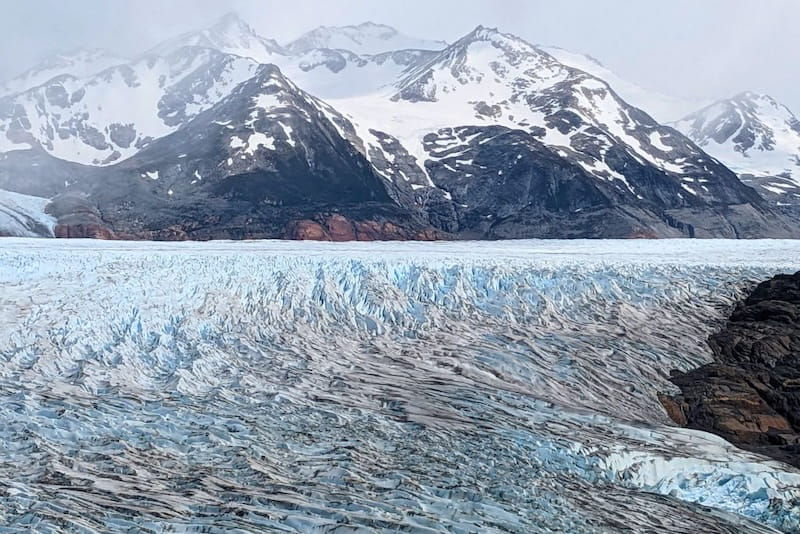
With 2-3 days to spend in the park, you can tailor your itinerary to suit your level of fitness, hiking experience and interests. Some of the key sites to see include the Britanico Lookout, the French Valley, Lake Pehoe, the Grey Glacier, and the lookout at the base of the Torres del Paine peaks. You can also book activities such as a cruise or kayaking at the base of the Grey Glacier, or ice hiking on the glacier!
Grey Glacier. Credit: Chanelle Rosenbaum
With 2 nights to spend in the park, the best spot to base yourself will be either the Refugio Paine Grande on Lake Pehoe, or Hotel Grey near the Grey Glacier. Paine Grande is actually located at one of two entrances to the park, which is reached by Catamaran. And the Catamaran also operates between Paine Grande and Hotel Grey.
Alternatively, you can spend one night at Paine Grande or Grey, and then travel by Catamaran and bus to the park’s other entrance, Laguna Amarga, where you can spend a night at the Refugio or Hotel las Torres and hike up to the Torres del Paine lookout to see the iconic three peaks.
If you can allow a bit of extra time in your itinerary, then the absolute best way to explore Torres del Paine is actually by doing one of the park’s multi-day hikes, the W Trek or O Circuit. These treks take between 3 to 9 days to complete and will take you to all the highlights of the park, allowing you to fully immerse yourself in this breathtaking environment.
Day 13-14: Travel back home via Santiago
Once your Patagonia experience comes to an end, it will be time to travel back home via Santiago. It’s a short flight back to Santiago from either Puerto Natales or Punta Arenas, where you can either get a connecting flight or spend a final night in Santiago before flying out the following day.
I checked into Hotel La Posta on a sunny early spring afternoon after a scenic just-under-three-hour drive from Rome. The skies could not be any more beautiful and I felt at such peace the moment I arrived.
Credit: Stefano Butturini
The Tuscan hotel is set in Bagno Vignoni, a tiny thermal village known for its centuries-old hot springs and singular stone piazza filled with steaming mineral water. Long prized since Etruscan and Roman times, the village feels suspended in another era. As soon as I entered the lobby of the hotel, I felt right at home.
This slowed rhythm signaled the kind of stay that is defined by warmth, wellness, and lingering Italian rituals.
The Stay
Green Bar. Credit: Stefano Butturini
Inside, the spaces unfold with a quiet, almost transportive charm. I started with a cheese, charcuterie, fruit and wine tasting opposite the Green Bar. I then decided to walk along outside and see the thermal waters for myself. The water flows both indoors and out, anchoring the experience in Bagno Vignoni’s centuries-old spa tradition.
Credit: Vanessa Gordon
In the gardens, I moved between three outdoor thermal pools, framed by trees and overlooking the Tuscan hills and the historic Rocca d’Orcia. With water temperatures ranging from 28°C to 42°C, it’s easy to lose track of time here. I spent most of my time outside during my stay.
Credit: Stefano Butturini
Tucked discreetly among the greenery was the detail that stayed with me most: a clay tennis court, open year-round and available by reservation. It’s understated but intentional. I also admired the bocce court and took my time to enjoy the slow, restorative sport that I never get to do while I am at home.
My Favorite 90 Seconds
Exterior pool. Credit: Stefano Butturini
Late during select evenings, when the sky is clear with stars speckled all around, the hotel offers one of its most memorable rituals: bathing under the stars. From 8:00 PM to 11:00 PM on Friday and Saturday evenings, guests can reserve access to the outdoor thermal pools, where warm mineral water, waterfalls designed for neck massage, hydrotherapy jets, and the surrounding gardens create an almost otherworldly calm.
My favorite 90 seconds at Hotel La Posta in Tuscany was simply floating in the pool under a starlit sky, with steam rising softly into the night. The moment felt timeless and it was that kind of moment that stayed with me long after checkout.
The Moments That Make It
Interior Spa. Credit: Stefano Butturini
I began most mornings in the spa, where the thermal water of Bagno Vignoni flows at 49°C, rich in carbonates, sulfates, calcium, and magnesium — minerals long prized for their restorative properties. The wellness area unfolds gently, with a covered passage leading to the outdoor thermal pool, a Finnish sauna, bio-sauna, Turkish bath, salt cave, and serene relaxation rooms.
Between treatments, I lingered with bowls of dried fruit and nuts and cups of hot tea. I took advantage of the relaxing moments around me and enjoed lingering for hours in the spa without my phone.
My slow mornings continued with a generous gourmet buffet breakfast with fresh breads and pastries, fruit, cheeses, and savory offerings.
Credit: Stefano Butturini
Credit: Vanessa Gordon
Credit: Vanessa Gordon
Evenings often began at Bar Verde, where cocktails are crafted beneath emerald-green walls as vintage vinyl spins softly in the background. Never rushed, and never loud.
Next is dinner, guided by Chef Matteo Antoniello. Eeach dish is rooted in traditional Tuscan cuisine and shaped by the surrounding territory. Ingredients are sourced primarily within the province of Siena, with meats from Bottega delle Carni in nearby San Quirico. The wine list reads like a love letter to the region, featuring exceptional producers from Orcia, Brunello, Nobile, and Sassicaia.
Who This Hotel Is Actually For
Hotel La Posta is for travelers who value ritual over rush and depth over display. It’s for those drawn to historic thermal villages and the quiet power of water.
This is a hotel for guests who appreciate wellness as a way of living, not a schedule, and for those who linger in saunas and salt caves, soak under the stars late into the night, and understand that movement and stillness belong side by side. It’s ideal for couples, solo travelers, small groups of friends seeking a restorative Tuscan escape grounded in care, craftsmanship, and a deep connection to place and history.
Can’t-miss experience:Thermal pool dips under the stars
Best for:Romantic escapes, quietly celebratory stays and slow-travel enthusiasts
Nearby Points of Interest
Trattoria Il Pozzo: A classic Val d’Orcia trattoria serving hearty pastas, wild boar, and regional wines in a relaxed, family-run setting.
Piazza delle Sorgenti: The village’s iconic thermal pool–filled piazza, dating back to Roman times and unlike any other town square in Italy.
Pienza: A UNESCO World Heritage Site famed for its Renaissance architecture, pecorino cheese shops, and postcard-worthy views over the Val d’Orcia.
Chapel of the Madonna di Vitaleta – One of Tuscany’s most photographed chapels, set among rolling hills and cypress trees, ideal for a golden-hour drive or morning walk.